

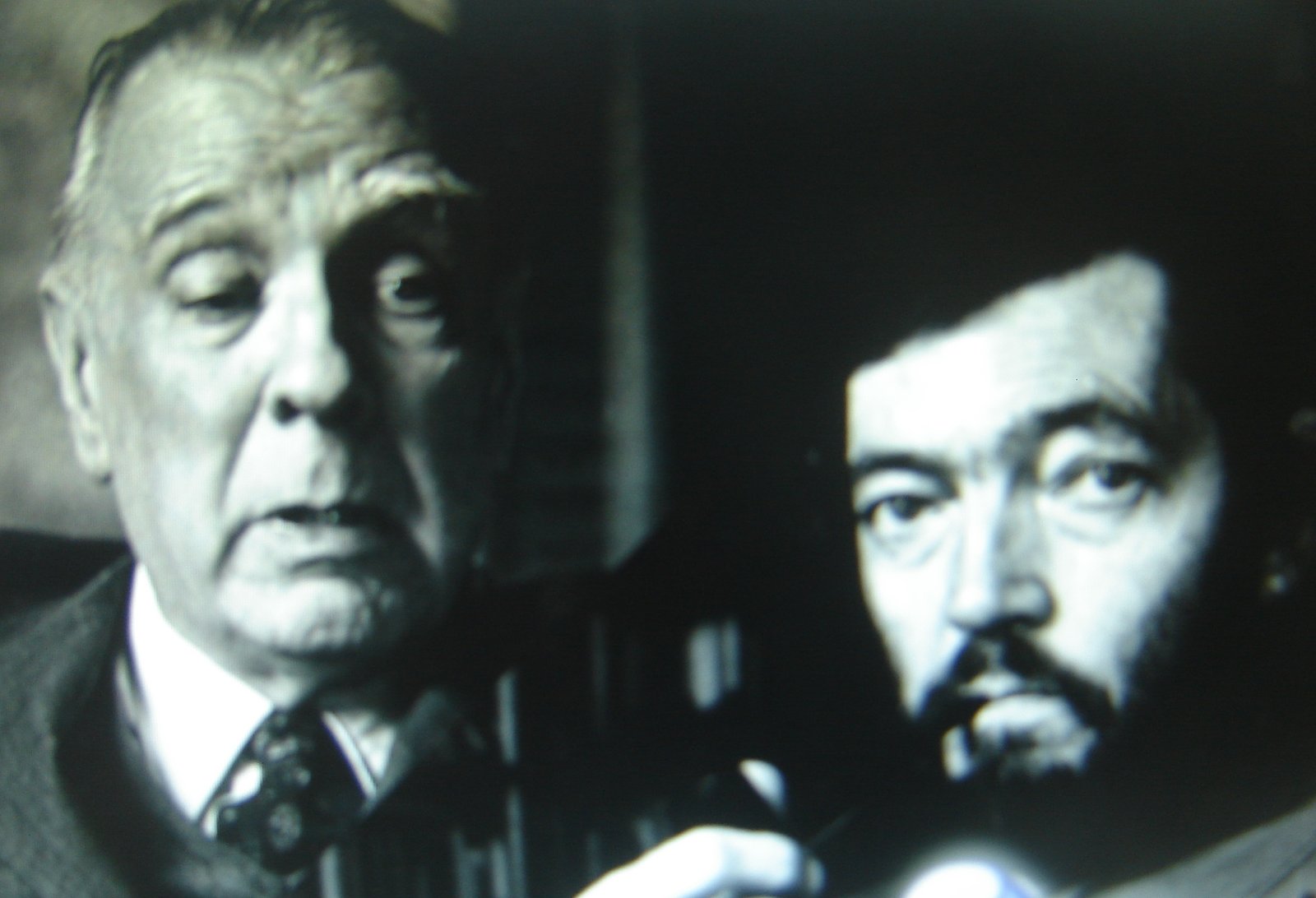
By Julio Cortázar
Translated by Fausto Adams
Since I’m going to address some aspects of the short story as a literary genre, and it’s possible that some of my ideas might surprise or clash with those who read them, it seems to me a matter of basic honesty to define the type of narrative that interests me, pointing out my way of understanding the world.
Almost all the stories I’ve written belong to what’s called the fantastic genre for lack of a better name, and they stand in opposition to that false realism which consists of believing that everything can be described and explained as the philosophical and scientific optimism of the 18th century took for granted—that is, within a world governed more or less harmoniously by a system of laws, principles, cause-and-effect relationships, defined psychologies, and well-mapped geographies.
In my case, the suspicion of another more secret and less communicable order, and the fruitful discovery of Alfred Jarry, for whom the true study of reality didn’t lie in law but in the exceptions to those laws, have been some of the guiding principles of my personal search for literature outside any overly naive realism.
That’s why, if in the ideas that follow you find a preference for everything exceptional in the short story, whether in themes or even expressive forms, I believe this presentation of my own way of understanding the world will explain my approach to and focus on the problem.
Ultimately, it could be said that I’ve only spoken about the short story as I practice it. And yet, I don’t think that’s the case. I’m certain that there exist certain constants, certain values that apply to all stories, fantastic or realistic, dramatic or humorous. And I think it might be possible to show here those invariable elements that give a good story its peculiar atmosphere and its quality as a work of art.
The opportunity to exchange ideas about the short story interests me for various reasons. I live in a country—France—where this genre has little presence, although in recent years there’s been growing interest among writers and readers in this form of expression. In any case, while critics continue accumulating theories and maintaining bitter controversies about the novel, almost no one is interested in the issues surrounding the short story.
Living as a story writer in a country where this expressive form is an almost exotic product inevitably forces one to seek in other literature the nourishment that’s lacking there. Little by little, in original texts or through translations, one accumulates almost resentfully an enormous quantity of stories from past and present, and the day comes when you can take stock, attempt an evaluative approach to this genre of such difficult definition, so elusive in its multiple and antagonistic aspects, and ultimately so secret and withdrawn into itself, a snail of language, mysterious brother of poetry in another dimension of literary time.
But besides this pause on the path that every writer must make at some point in their work, talking about the short story has special interest for us, since almost all Spanish-speaking American countries are giving the short story an exceptional importance it has never had in other Latin countries like France or Spain.
Among us, as is natural in young literature, spontaneous creation almost always precedes critical examination, and it’s good that it should be so. No one can claim that stories should only be written after knowing their laws. First, there are no such laws; at most we can speak of points of view, of certain constants that give structure to this genre so resistant to categorization; second, theorists and critics don’t have to be the story writers themselves, and it’s natural that the former only enter the scene when there already exists a wealth, an accumulation of literature that allows for investigating and clarifying its development and qualities.
In America, whether in Cuba or Mexico or Chile or Argentina, a great number of story writers have been working since the beginning of the century, without knowing each other, sometimes discovering one another in an almost posthumous way. Faced with this panorama lacking sufficient coherence, in which few know in depth the work of others, I think it’s useful to talk about the short story above national and international particularities, because it’s a genre that among us has an importance and vitality that grows day by day.
Someday the definitive anthologies will be compiled—as they do in Anglo-Saxon countries, for example, and we’ll know how far we’ve been capable of going. For the moment, it doesn’t seem useless to me to talk about the short story in abstract terms, as a literary genre. If we form a convincing idea of this form of literary expression, it can help establish a scale of values for that ideal anthology yet to be made.
There’s too much confusion, too many misunderstandings in this area. While story writers continue their task, it’s time to talk about that task itself, apart from individuals and nationalities. We must come to have a living idea of what the short story is, and that’s always difficult to the extent that ideas tend toward the abstract, to devitalize their content, while life in turn anxiously rejects that bond that conceptualization wants to throw over it to fix and categorize it. But if we don’t have a living idea of what the short story is, we’ll have wasted our time, because a story, ultimately, moves on that plane of humanity where life and the written expression of that life wage a fraternal battle, if you’ll allow me the term; and the result of that battle is the story itself, a living synthesis as well as a synthesized life, something like a tremor of water inside a crystal, a fleetingness within permanence. Only with images can we transmit that secret alchemy that explains the profound resonance a great story has within us, and that also explains why there are many truly great stories.
To understand the peculiar character of the short story, it’s usually compared with the novel, a much more popular genre about which precepts abound. It’s pointed out, for example, that the novel develops on paper, and therefore in reading time, with no limit other than the exhaustion of the novelistic material; for its part, the story starts from the notion of limit, and first of all physical limit, to the point that in France, when a story exceeds twenty pages, it takes the name of nouvelle, a genre halfway between the short story and the novel proper. In this sense, the novel and the short story can be compared analogically with film and photography, insofar as a movie is in principle an “open order,” novelistic, while a successful photograph presupposes a tight prior limitation, imposed partly by the reduced field the camera covers, and the photographer aesthetically uses that limitation.
I don’t know if you’ve heard professional photographers talk about their art; I’ve always been surprised that they express themselves just as a story writer might in many respects. Photographers of the quality of a Cartier-Bresson or a Brassaï define their art as an apparent paradox: that of cutting out a fragment of reality, setting certain limits for it, but in such a way that this cutout acts like an explosion that throws wide open a much broader reality, like a dynamic vision that spiritually transcends the field covered by the camera. While in film, as in the novel, the capture of that broader and more multiform reality is achieved through the development of partial, accumulative elements that don’t exclude, of course, a synthesis that provides the “climax” of the work, in a photograph or a high-quality story one proceeds inversely—that is, the photographer or story writer finds themselves forced to choose and limit an image or event that are significant, that not only have value in themselves but are capable of acting on the spectator or reader as a kind of opening, a ferment that projects intelligence and sensitivity toward something that goes far beyond the visual or literary anecdote contained in the photo or story.
An Argentine writer, very fond of boxing, told me that in that fight between a passionate text and its reader, the novel always wins on points, while the story must win by knockout. It’s true, insofar as the novel progressively accumulates its effects on the reader, while a good story is incisive, biting, merciless from the first sentences. Don’t take this too literally, because the good story writer is a very clever boxer, and many of their initial blows might seem ineffective when they’re already undermining the adversary’s most solid resistance.
Take any great story you prefer and analyze its first page. I’d be surprised if you found gratuitous, merely decorative elements. In the story writer knows they can’t proceed accumulatively, that time isn’t their ally; their only resource is to work in depth, vertically, whether upward or downward in literary space. And this, which expressed this way seems like a metaphor, nevertheless expresses the essential of the method. The time of the story and the space of the story must be as if condemned, subjected to high spiritual and formal pressure to provoke that “opening” I referred to before. It’s enough to ask yourself why a particular story is bad. It’s not bad because of the theme, because in literature there are no good themes or bad themes, there’s only good or bad treatment of the theme. Nor is it bad because the characters lack interest, since even a stone is interesting when Henry James or Franz Kafka deals with it. A story is bad when it’s written without that tension that should manifest itself from the first words or scenes. And so, we can already advance that the notions of significance, intensity, and tension will allow us, as we’ll see, to better approach the structure of the story itself.
We were saying that the story writer works with material we call significant. The significant element of the story would seem to lie mainly in its theme, in the fact of choosing a real or fictional event that possesses that mysterious property of radiating something beyond itself, to the point that a vulgar domestic episode, as occurs in so many admirable tales by Katherine Mansfield or Sherwood Anderson, becomes the implacable summary of a certain human condition, or the burning symbol of a social or historical order.
A story is significant when it breaks its own limits with that explosion of spiritual energy that suddenly illuminates something that goes far beyond the small and sometimes miserable anecdote it tells. I think, for example, of the theme of most of Anton Chekhov’s admirable tales. What’s there that isn’t sadly every day, mediocre, often conformist or uselessly rebellious? What’s told in those stories is almost what we as children, in the boring gatherings we had to share with adults, heard our grandparents or aunts say; the small, insignificant family chronicle of frustrated ambitions, modest local dramas, anxieties, the size of a living room, a piano, tea with sweets. And yet, Katherine Mansfield’s stories, Chekhov’s, are significant, something explodes in them while we read them, and they propose to us a kind of rupture of the everyday that goes far beyond the anecdote described.
You’ve already realized that this mysterious significance doesn’t lie solely in the story’s theme, because in truth most of the bad stories we’ve all read contain episodes like those treated by the authors mentioned. The idea of significance can’t make sense if we don’t relate it to those of intensity and tension, which no longer refer only to the theme but to the literary treatment of that theme, to the technique employed to develop the theme. And it’s here where, suddenly, the division occurs between the good and bad story writer. That’s why we’ll have to pause with all possible care at this crossroads, to try to understand a little more that strange form of life that is a successful story, and see why it’s alive while others, which apparently resemble it, are nothing more than ink on paper, food for oblivion.
Let’s look at the thing from the story writer’s angle and in this case, necessarily, from my own version of the matter. A story writer is someone who suddenly, surrounded by the immense hubbub of the world, committed to a greater or lesser degree to the historical reality that contains him, chooses a particular theme and makes a story from it. Selecting a theme is not straightforward. Sometimes the writer chooses, and other times it feels as if the theme imposes itself irresistibly, pushes him to write it.
In my case, the vast majority of my stories were written—how to put it—outside my will, above or below my reasoning consciousness, as if I were nothing more than a medium through which an alien force passed and manifested itself. But that, which might depend on each person’s temperament, doesn’t alter the essential fact, which is that at a given moment there’s a theme, whether invented or voluntarily chosen, or strangely imposed from a plane where nothing is definable. There’s a theme, I repeat, and that theme will become a story. Before that happens, what can we say about the theme itself? Why that theme and not another? What reasons consciously or unconsciously move the story writer to choose a particular theme?
It seems to me that the theme from which a good story will emerge is always exceptional, but I don’t mean by this that a theme should be extraordinary, out of the ordinary, mysterious or unusual. Quite the contrary, it can be a perfectly trivial and everyday anecdote. The exceptional lies in a quality similar to that of a magnet; a good theme attracts a whole system of connected relationships, coagulates in the author, and later in the reader, an immense quantity of notions, glimpses, feelings and even ideas that float virtually in their memory or sensitivity; a good theme is like a sun, a star around which a planetary system revolves that often one wasn’t conscious of until the story writer, astronomer of words, reveals its existence to us. Or to be more modest and more current at once, a good theme has something of an atomic system, a nucleus around which electrons revolve; and all that, after all, isn’t it already like a proposition of life, a dynamic that urges us to leave ourselves and enter a more complex and beautiful system of relationships?
I’ve often asked myself what the virtue is of certain unforgettable stories. Now we read them along with many others, which could even be by the same authors. And here we are, years have passed, and we’ve lived and forgotten so much. But those small, insignificant stories, those grains of sand in the immense sea of literature, are still there, beating within us. Isn’t it true that each of us has their collection of stories? I have mine, and I could give some names. I have William Wilson by Edgar A. Poe; I have Ball of Fat by Guy de Maupassant. The little planets spin and spin: there’s A Christmas Memory by Truman Capote; Tlön, Uqbar, Orbis Tertius by Jorge Luis Borges; A Dream Come True by Juan Carlos Onetti; The Death of Ivan Ilyich by Tolstoy; Fifty Grand by Hemingway; The Dreamers by Isak Dinesen, and I could go on and on…
You’ll have noticed that not all these stories are necessarily anthology pieces. Why do they endure memories? Think about the stories you haven’t been able to forget and you’ll see they all have the same characteristic: they’re binding agents of a reality infinitely vaster than that of their mere anecdote, and that’s why they’ve influenced us with a force that the modesty of their apparent content, the brevity of their text, wouldn’t lead one to suspect. And that person who at a particular moment chooses a theme and makes a story from it will be a great story writer if their choice contains—sometimes without their conscious knowledge—that fabulous opening from the small toward the large, from the individual and circumscribed to the very essence of the human condition. Every enduring story is like the seed where the gigantic tree lies sleeping. That tree will grow in us, will cast its shadow in our memory.
However, we need to better clarify this notion of significant themes. The same theme can be profoundly significant for one writer, and blank for another; the same theme will awaken enormous resonances in one reader and leave another indifferent. In sum, we can say there are no significant or insignificant themes. What exists is a mysterious and complex alliance between a certain writer and a certain theme at a given moment, just as the same alliance might later occur between certain stories and certain readers. That’s why, when we say a theme is significant, as in the case of Chekhov’s stories, that significance is determined to some extent by something outside the theme itself, by something that comes before and after the theme. What comes before is the writer, with their load of human and literary values, with their will to create a work that has meaning; what comes after is the literary treatment of the theme, the way the story writer, facing their theme, attacks and situates it verbally and stylistically, structures it in story form, and ultimately projects it toward something that exceeds the story itself.
Here it seems appropriate to mention something that happens to me frequently, and that other story writers know as well as I do. It’s common that during a conversation, someone tells a funny or moving or strange episode and then turning to the story writer present says: “There’s a great theme for a story; I’m giving it to you.” I’ve been given loads of themes that way, and I’ve always answered politely: “Thank you very much,” and I’ve never written a story with any of them. However, once a friend casually told me about the adventures of a maid of hers in Paris. While listening to her account, I felt that it could become a story. For her those episodes were nothing more than curious anecdotes; for me, suddenly, they became charged with a meaning that went far beyond their simple and even vulgar content. That’s why, whenever I’ve asked myself: How to distinguish between an insignificant theme, however entertaining or exciting it might be, and a significant one? I’ve answered that the writer is the first to suffer that indefinite but overwhelming effect of certain themes, and that’s precisely why he is a writer. Just as for Marcel Proust, the taste of a madeleine dipped in tea suddenly opened an immense fan of apparently forgotten memories, in an analogous way the writer reacts to certain themes in the same way their story, later, will make the reader react. Every story is thus predetermined by the aura, by the irresistible fascination that the theme creates in its creator.
We thus reach the end of this first stage of a story’s birth and touch the threshold of its creation properly. Here’s the story writer, who has chosen a theme using those subtle antennae that allows them to recognize the elements that will later become a work of art. The story writer faces their theme, faces that embryo that’s already life, but hasn’t yet acquired its definitive form. For them this theme has sense, has significance. But if everything were reduced to that, it would be of little use; now, as the last term of the process, as implacable judge, the reader is waiting, the final link in the creative process, the fulfillment or failure of the cycle. And it’s then that the story must become a bridge, has to become a passage, must make the leap that projects the initial significance, discovered by the author, to that more passive and less vigilant and often even indifferent extreme called the reader.
Inexperienced story writers often fall into the illusion of imagining that it’s enough for them to write plainly and simply a theme that has moved them, to move their readers in turn. They fall into the naivety of someone who finds their child beautiful and assumes everyone else sees them as equally beautiful. With time, with failures, the story writer capable of overcoming that first naive stage learns that in literature good intentions aren’t enough. They discover that to recreate in the reader that emotion that led them to write the story, a writer’s craft is necessary, and that craft consists, among many other things, in achieving that atmosphere proper to every great story, that compels continued reading, that captures attention, that isolates the reader from everything around them only to later, once the story is finished, reconnect them with their circumstances in a new way, enriched, deeper or more beautiful. And the only way this momentary kidnapping of the reader can be achieved is through a style based on intensity and tension, a style in which the formal and expressive elements adjust, without the slightest concession, to the nature of the theme, give it its most penetrating and original visual and auditory form, make it unique, unforgettable, fix it forever in its time and environment and most primordial sense.
What I call intensity in a story consists of the elimination of all intermediate ideas or situations, all the padding or transitional phases that the novel permits and even demands. None of you will have forgotten The Cask of Amontillado by Edgar A. Poe. What’s extraordinary about this story is the abrupt dispensing with any description of setting. By the third or fourth sentence we’re in the heart of the drama, witnessing the implacable fulfillment of revenge. The Killers by Hemingway is another example of intensity obtained through the elimination of everything that doesn’t essentially converge on the drama.
But let’s think now of the stories of Joseph Conrad, D. H. Lawrence, and Kafka. In them, with modalities typical of each, the intensity is of another order, and I prefer to give it the name of tension. It’s an intensity exercised in the way the author slowly brings us closer to what’s being told. We’re still very far from knowing what’s going to happen in the story, and yet we can’t escape its atmosphere. In the case of The Cask of Amontillado and The Killers, the facts stripped of all preparation leap upon us and trap us; on the other hand, in a delayed and flowing tale by Henry James—The Lesson of the Master, for example—one immediately feels that the facts themselves lack importance, that everything is in the forces that unleashed them, in the subtle web that preceded and accompanies them. But both the intensity of action and the internal tension of the tale are the product of what I earlier called the writer’s craft, and it’s here where we’re approaching the end of this walk through the short story.
In my country, and now in Cuba, I’ve been able to read stories by the most varied authors: mature or young, from the city or countryside, devoted to literature for aesthetic reasons or for social imperatives of the moment, committed or uncommitted. Well then, and although it sounds like a truism, both in Argentina and here the good stories are being written by those who master the craft in the sense already indicated. An Argentine example will better clarify this. In our central and northern provinces there exists a long tradition of oral stories, which gauchos transmit to each other at night around the campfire, which fathers continue telling their children, and which suddenly pass through the pen of a regionalist writer and, in an overwhelming majority of cases, become terrible stories. What has happened? The tales themselves are flavorful, they translate and summarize the experience, sense of humor and fatalism of the country man; some even rise to tragic or poetic dimension. When you hear them from the mouth of an old criollo, between mate and mate, you feel like an annulment of time, and think that Greek bards also told of Achilles’ exploits like this to the wonder of shepherds and travelers. But at that moment, when a Homer should emerge to make an Iliad or Odyssey from that sum of oral traditions, in my country emerges a gentleman for whom city culture is a sign of decadence, for whom the story writers we all love are aesthetes who wrote for the mere delight of liquidated social classes, and this gentleman understands instead that to write a story all you need is to put in writing a traditional tale, preserving as much as possible the spoken tone, the rural turns of phrase, the grammatical incorrections, what they call local color. I don’t know if this way of writing popular stories is cultivated in Cuba; I hope not…
Source: Julio Cortázar
Fair Use Disclaimer
This website publishes excerpts of content from other authors under the Fair Use doctrine as permitted by the U.S. Copyright Office (17 U.S.C. § 107) for educational, informational, commentary, and criticism purposes. All excerpted content is properly attributed to its original source and copyright holder. If you believe any content infringes on your copyright, please contact us immediately at admin@faustoadams.com



[…] Read the Inspiration for this article: “Aspects of the Short Story” by Julio Cortázar. […]