
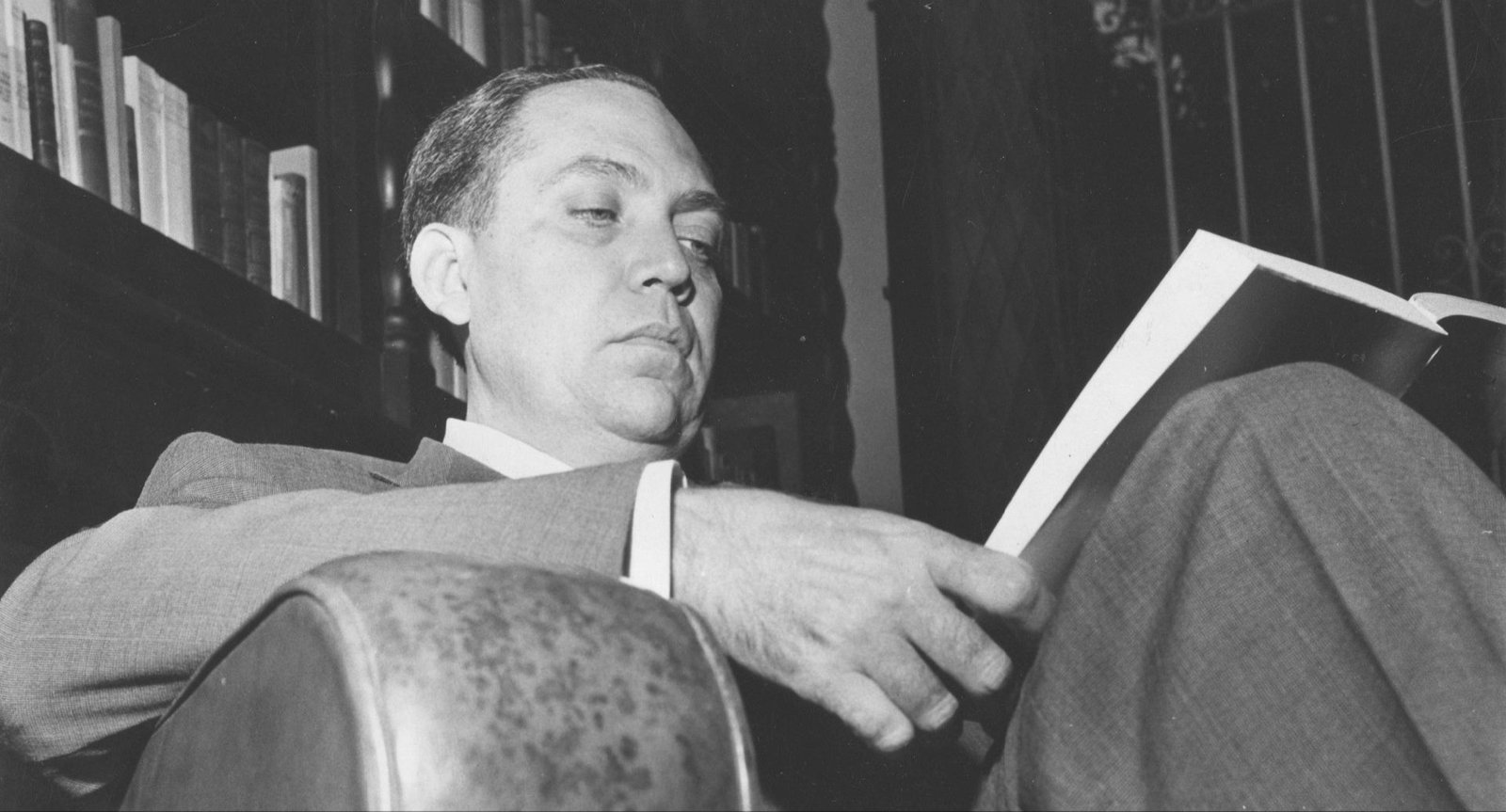
Arturo Uslar Pietri
(Caracas, 1906 – Caracas, 2001)
Barabbas (1928) Barabbas and Other Tales (Caracas: Tip. Vargas, 1928)
This text is “Barrabás” (1928), a short story about the biblical figure Barabbas. I’ll translated it preserving the literary style and nuance.
The text tells the story from Barabbas’s perspective – how he ended up in prison, his interaction with the guard, and his eventual release when the crowd chose to free him instead of Jesus. It’s a psychological exploration of guilt, truth, and the nature of crime.
Barabbas
By Arturo Uslar Pietri
Translated by Fausto Adams
His lineage came from Bethabara, in the country of the Gadarenes. He had black and thick beard like rain, beneath innocent animal eyes, and among countless names his was Barabbas. He knew the sacred books, was charitable and respectful, kept the Sabbath and knew that Jehovah was terrible and possessed a multitude of hands with a punishment at the tip of each finger.
It was noon. A lazy wind spilled over the courtyard and overflowed through the prison bars. The air was crushed with an indefinable and bothersome smell. There was a great quantity of people crammed together—thieves, prostitutes, vagrants, one or two mangy dogs, and a soldier with weapons standing guard, walking from one end to the other rapidly, as if intending to fold up a very long distance. On one turn he focused his eyes on him; between the beard his pale skin stood out like water over stones. The look was followed by the question.
“Me? Barabbas…”
“Barabbas? … Ah! Yes. The murderer. You know? They’re going to kill you.”
“Yes. I know already,” he responded with indifference to say something, falling silent to contemplate abstractedly his long, dirty nails. The guard continued his patrol.
When passing by him again, continuing in his position, he asked him:
“Listen. What was that you said about killing me? Huh?”
“Yes. They’ll crucify you. It’s already been decided.”
The other continued his monotonous rounds and Barabbas went back to burying that dull gaze in the hollow of his hands.
After a while he called the guard again.
“Look. Do you even know who I’ve killed?”
“Yes. Jahel’s son. You stabbed him.”
“Jahel’s son… Is that all?”
“No. You’re also implicated in the riot.”
“In the riot… Ah! Fine. Wait. Look. Don’t go. You know? Everything you’ve said is a lie, all of it, all of it. But they’ll kill me anyway? Of course. They’ll kill me. Pst… So then!”
“So then what? You think you can play innocent? It’s useless. Jahel has told everything. You came in the great cloud of shouts with those from the riot and when the soldiers surprised them in the street, you, to save yourself, entered her house through the window. The rest you know better than I.”
Barabbas remained silent. After a moment, as if under the power of a sudden idea, he said:
“Listen… All of that is a lie, you know? It’s not necessary. It already happened. Fine. But I’m going to tell you so… Do you have children? Good. Well, for that. So that one day you can tell them when you don’t remember anything better. I don’t know Jahel, nor did I know his son, nor do I know the face that Jehovah shaped for them, and this is as true as life itself.
One night, there was so much moon it seemed like a convalescent day, I was coming through the streets, walking, as men do when they have nothing to do. Merchants too! When suddenly, I feel a mob of men with weapons and shouts bursting around a corner, running at full speed. They were coming at me like a madhouse let loose. Has that ever happened to you, guard?”
“Don’t lie, it was the riot and you were with them.”
“I’m not lying. They were coming at me. Besides, what one believes is as if it actually were, or perhaps more so. I tell you, then, that they were coming at me and I started to flee. They ran like things, not like men, you know? They didn’t notice me, nor did they shout my name; then I understood that if they caught me I would perish under the rain of their feet. There was an open window and I threw myself through it like a stone.
I tumbled over a bed and fell in a corner. The one sleeping woke up shouting alarm.
You know, he who comes from darkness sees; he who awakens doesn’t see. I saw how from another bed a shadow also rose and how the two entangled and fought furiously. From my corner I understood they were looking for me. They fell to the floor: one above, one below. And the one below gave a single cry and fell silent. From my corner I understood that the one below had taken my place. At the cry came people and lights and they found me in front of a disheveled, trembling woman and between us two a man with a knife across his chest.
And the woman began to scream and say: ‘My son. My son! They killed him!’; while she rubbed herself over him, kissing him and staining herself with blood. Between her cries she looked at me with hatred and exclaimed: ‘The murderer. There he is. Take him away. He killed him! The murderer!!’ and everyone looked at me with eyes glazed with hatred, but I didn’t understand.
That was too extraordinary and violent; I began to feel pity for that woman who had killed ‘her flesh,’ and I thought about the uselessness of those screams, because death is a journey and there’s no way to stop one who’s leaving because ‘he leaves by staying.’
When I came to know myself again and return from that great surprise, they were taking me through the street tied up among the hatred of the people. Since then I’ve been in prison.”
Barabbas fell silent, looking at his nails with his habitual gesture. The jailer cut the silence.
“Why didn’t you tell that to the judges?”
“They didn’t ask me.”
The murmur of conversations of all the people crowded in the dungeon became dense like a chorus. The wind drew a sound of water from the trees in the courtyard. The jailer had squatted in front of the prisoner.
Suddenly Barabbas, taking him by an arm, asked with anxiety, almost with anguish:
“Listen! Who gets crucified?”
“Those who have committed a crime.”
“Only?”
“Only.”
“Are they going to crucify me?”
“Yes.”
“It can’t be! What crime have I committed?”
The guard was confused, not finding an answer. In the roughness of his intelligence he understood that question contained something transcendent. With mechanical movements he began to stroke his beard like an automaton.
Suddenly his face lit up as if he had made a discovery.
“Barabbas. You have committed a crime. Your death is justified. It’s a serious crime.”
“Are you crazy? Which…”
“One that must be punished very harshly.”
“Which?”
“The crime of keeping silent.”
“Keeping silent?”
“Yes. You knew the truth and you buried it inside your mouth.”
The jailer stood up with a satisfied air, he was the justified man, and continued his tedious and slow patrol, slow and overwhelming, without noticing the abstracted expression on the prisoner’s face who was declaiming like a litany in a half voice:
“The crime of keeping silent…!”
“Weren’t you dead?” It seemed that violet tone of the sky came from the woman’s voice. “Hadn’t they killed you?”
And she ran her hands over him, as if modeling him, all around the outline of his figure.
“Barabbas, my man, tell me, is it that I’ve died too and I’m seeing shadows or is it true that you are, in your voice and in your blood, before me?”
The man, taking her head in his hands, answered:
“I’m caught in great astonishment and I don’t believe I’m alive because this must be the confusion of death. Do you think I’m alive?”
“Yes. Now I feel certain. Why wouldn’t you be? You live and I see you.”
“You say so. It must be so.”
But Barabbas was naive and cheerful and now he was sad; he was sweet and carefree and he was grim; he was indifferent and obsession immobilized itself on his face.
“Woman, had you ever heard it said? Truth is a crime. A horrendous crime. You know?”
“You’re delirious. What’s wrong with you?”
Barabbas fell silent, letting his gaze rest on the edge of his filthy and wild nails, as was his custom.
“I was imprisoned, you know?”
“Yes.”
“And they were going to crucify me.”
“Jehovah has saved you, my man!”
“No! That’s false. Jehovah didn’t save me. A crime saved me.”
“Which? Yours? You’re crazy…”
“No, someone else’s. But be quiet. Don’t interrupt me.”
The man remained silent for a while as if organizing his thoughts and then continued his conversation with the slowness of one who goes sowing.
“They were going to crucify me. But, you know, when Passover comes it’s customary to release a prisoner to the people. Whichever one they want. They choose two for the people to select one from among them. I was one of those called. But I had no hope. I had a great crime upon me.”
The woman interrupted him:
“Yes, you had killed Jahel’s son.”
“No, that wasn’t my crime. My crime was another. Another I don’t understand: keeping silent. The jailer told me. He also told me it was horrible and without forgiveness. Keeping silent. This seems absurd, right? Well no, it’s not. This is ‘transparent,’ this can be explained; the other was absurd, inexplicable, like a sun at midnight.
And Barabbas remained silent for a moment as if the words had plummeted into an abyss.
“You know, the jailer came looking for me, the same one I had spoken with before, and he took me through the corridors dressed in the noise of my chains. On the way he said to me:
‘Do you have hope or not?’
I answered him: ‘I don’t know. Do you know who the other one is?’
‘Yes, they’ve told me his name is Jesus. I think he’s a maniac.’
Before the Praetorium the people had spread out, and the people saw me, and saw the Governor, fragrant with flowers, and the other prisoner. The other prisoner was a poor thin man, with a humble appearance, and with large eyes that took up half his face.
The governor asked the people: ‘Which of the two do you want me to release?’ and I felt inside me how my heart was racing with anguish. But then everyone began to shout loudly: ‘Barabbas. Barabbas’ like a speaking sea.
I felt emotion. All those people were acclaiming me and knew me. But when I turned I saw the face of the other prisoner who was humiliated as if the shouts were stoning him and I began to feel pity, because I thought that in martyrdom that man would suffer more than I.
Since the jailer was at my side, I could say in his ear:
‘This is Jesus?’
‘Yes.’
‘His crime must have been much greater than mine.’
‘What is he accused of?’
‘He scorns Caesar’s laws. He promises to do supernatural things. He’s a great egotist. He claims that he alone speaks the truth.’
‘Is that a crime?’
‘A great crime.’
The guard said no more, but inside me, like a wind, this astonishment entered. I don’t know if I’ve dreamed, if I’m dead, or if it’s my blood and my voice speaking to you.
As if through darkness I saw the governor washing his hands in a jug, as men do after they’ve eaten.
They released my chains, and I fell among that undertow of people like a log.
And now woman, I want you to tell me. Had you ever heard it said? Is it that words can throw handfuls of confusion over life? Had you ever heard such a thing?”
Without waiting for an answer he went out to the path that sank into the woman’s eyes. The sky was sown with violets and Barabbas stood out against its background like a block of stone devastated by axes.
Source: Arturo Uslar Pietri
Barabbas (1928) Barabbas and Other Tales (Caracas: Tip. Vargas, 1928)
More books by Arturo Uslar Pietri:
Fair Use Disclaimer
This website publishes excerpts of content from other authors under the Fair Use doctrine as permitted by the U.S. Copyright Office (17 U.S.C. § 107) for educational, informational, commentary, and criticism purposes. All excerpted content is properly attributed to its original source and copyright holder. If you believe any content infringes on your copyright, please contact us immediately at admin@faustoadams.com