

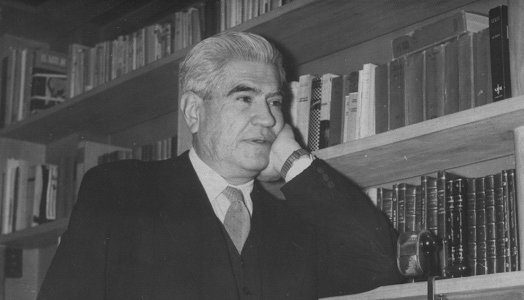
Manuel Rojas
(Buenos Aires, 1896 – Santiago, 1973)
The Glass of Milk (1927)
Originally published in the newspaper El Mercurio
[Santiago de Chile] (January 16, 1927);
The Delinquent
(Santiago de Chile: Zig-Zag, 1948, 215 pages), pages 29-41.
I’ve translated the complete short story “El vaso de leche” (The Glass of Milk) by Manuel Rojas into modern English. This moving tale about a young sailor struggling with hunger and pride in a port city has been rendered to preserve its emotional depth and literary quality while making it accessible to contemporary readers.
The story beautifully captures themes of human dignity, compassion, and the struggle between pride and survival through the young protagonist’s three days of hunger and his eventual encounter with the kind dairy shop owner.
The Glass of milk
By Manuel Rojas
Translated by Fausto Adams
Leaning against the starboard rail, the sailor seemed to be waiting for someone. In his left hand he held a white paper bundle, stained with grease in several places. With his other hand he tended to his pipe.
Between some train cars, a thin young man appeared; he stopped for a moment, looked toward the sea, then moved forward, walking along the edge of the dock with his hands in his pockets, distracted or lost in thought.
When he passed in front of the ship, the sailor shouted to him in English:
“I say; look here!”
The young man raised his head and, without stopping, answered in the same language:
“Hello! What?”
“Are you hungry?”
There was a brief silence, during which the young man seemed to reflect and even took a shorter step than the others, as if to stop; but finally he said, while directing a sad smile at the sailor:
“No, I am not hungry. Thank you, sailor.”
“Very well.”
The sailor took the pipe from his mouth, spat, and placing it again between his lips, looked away. The young man, ashamed that his appearance aroused feelings of charity, seemed to quicken his pace, as if fearing he might regret his refusal.
A moment later, a magnificent vagrant, dressed improbably in rags, large broken shoes, a long blond beard and blue eyes, passed before the sailor, and the sailor, without calling to him first, shouted:
“Are you hungry?”
He hadn’t even finished his question when the vagrant, looking with bright eyes at the package the sailor held in his hands, answered hastily:
“Yes, sir, I am very hungry!”
The sailor smiled. The package flew through the air and landed in the hungry man’s eager hands. He didn’t even say thank you, and opening the still-warm bundle, sat on the ground, rubbing his hands happily as he contemplated its contents. A port vagrant might not know English, but he would never forgive himself for not knowing enough to ask for food from someone who speaks that language.
The young man who had passed by moments before, standing a short distance away, witnessed the scene.
He too was hungry. It had been exactly three days since he had eaten, three long days. And more from timidity and shame than from pride, he resisted standing in front of the ships’ gangways at mealtime, hoping for some package containing leftover stew and pieces of meat from the sailors’ generosity. He couldn’t do it, he could never do it. And when, as in the recent case, someone offered him their leftovers, he heroically rejected them, feeling that the refusal increased his hunger.
It had been six days since he’d been wandering through the alleys and docks of that port. An English steamer coming from Punta Arenas had left him there, a port where he had deserted from a ship where he served as captain’s boy. He spent a month there, helping an Austrian crab fisherman with his work, and secretly boarded the first ship that passed heading north.
They discovered him the day after setting sail and sent him to work in the boilers. At the first major port the steamer touched, they disembarked him, and there he remained, like a bundle without address or recipient, not knowing anyone, without a cent in his pockets and without knowing any trade.
While the steamer was there, he could eat, but afterwards… The enormous city that rose beyond the alleys full of taverns and poor inns didn’t attract him; it seemed to him a place of slavery, airless, dark, without the broad grandeur of the sea, and between whose high walls and straight streets people live and die dazed by an anguishing hustle and bustle.
He was possessed by an obsession with the sea, which twists the smoothest and most defined lives like a powerful arm bends a thin rod. Although he was very young, he had made several trips along the coasts of South America, on various steamers, performing different tasks and duties, tasks and duties that on land had almost no application.
After the steamer left, he walked and walked, hoping chance would provide something that would allow him to live somehow while he got back to his familiar ways; but he found nothing. The port had little activity and the few steamers where work was available didn’t accept him.
Countless professional vagabonds wandered around there; sailors without contracts like him, deserters from steamers or fugitives from some crime; vagrants given to idleness, who sustained themselves on who knows what, begging or stealing, passing their days like beads on a grimy rosary, waiting for who knows what strange events, or waiting for nothing, individuals from the most exotic and strange races and peoples, even those whose existence you don’t believe in until you’ve seen a living specimen.
The next day, convinced that he couldn’t resist much longer, he decided to resort to any means to obtain food.
Walking, he came upon a steamer that had arrived the night before and was loading wheat. A line of men marched in a circle, carrying heavy sacks on their shoulders from the train cars, crossing a gangplank to the hold’s hatch, where the stevedores received the cargo. He watched for a while until he dared to speak with the foreman, offering his services. He was accepted and spiritedly joined the long line of carriers.
During the first part of the workday, he worked well; but afterward he began to feel tired and dizzy spells came over him, wavering on the gangplank when he walked with the load on his shoulder, seeing at his feet the opening formed by the side of the ship and the dock wall, at the bottom of which the sea, stained with oil and covered with debris, gurgled dully.
At lunchtime there was a brief break, and while some went to eat at nearby eateries and others ate what they had brought, he lay on the ground to rest, concealing his hunger.
The workday ended with him completely exhausted, covered in sweat, reduced to his last strength. While the workers retired, he sat on some bags watching for the foreman, and when the last one had left, he approached him and, confused and hesitant, though without telling him what was happening to him, asked if they could pay him immediately or if it was possible to get an advance on what he had earned.
The foreman answered that it was customary to pay at the end of the job and that it would still be necessary to work the next day to finish loading the steamer. One more day! On the other hand, they didn’t advance a cent.
“But,” he said, “if you need it, I could lend you about forty cents… I don’t have more.”
He thanked him for the offer with an anguished smile and left.
An acute desperation came over him then. He was hungry, hungry, hungry! A hunger that bent him like a whip; he saw everything through a blue fog and when walking he staggered like a drunk. However, he couldn’t have complained or screamed, for his suffering was dark and exhausting; it wasn’t pain, but dull anguish, exhaustion; it seemed he was crushed by a great weight.
He suddenly felt like a burning in his entrails and stopped. He began to lean, lean, bending forcibly like an iron bar, and thought he was going to fall. At that instant, as if a window had opened before him, he saw his house, the landscape visible from it, his mother’s face and his sisters’, everything he loved and cherished appeared and disappeared before his eyes closed by fatigue… Then, little by little, the faintness ceased and he straightened up, while the burning slowly cooled. Finally he stood upright, breathing deeply. One more hour and he would fall to the ground.
He quickened his pace, as if fleeing from a new dizzy spell, and while walking he resolved to go eat anywhere, without paying, ready to be shamed, to be beaten, to be sent to jail, anything; the important thing was to eat, eat, eat. A hundred times he mentally repeated this word: eat, eat, eat, until the word lost its meaning, leaving him with an impression of hot emptiness in his head.
He wasn’t thinking of running away; he would tell the owner: “Sir, I was hungry, hungry, hungry, and I have nothing to pay with. Do what you want.”
He reached the first streets of the city and on one of them found a dairy shop. It was a very bright and clean little business, full of small tables with marble tops. Behind a counter stood a blonde lady with a spotless white apron.
He chose that business. The street had little traffic. He could have eaten at one of the eateries near the dock, but they were full of people playing cards and drinking.
In the dairy there was only one customer. He was an old man with glasses who, with his nose buried in the pages of a newspaper, reading, remained motionless, as if glued to the chair. On the table was a glass of milk half consumed.
He waited for him to leave, pacing on the sidewalk, feeling the burning from before gradually igniting in his stomach, and he waited five, ten, up to fifteen minutes. He got tired and stood to one side of the door, from where he threw looks at the old man that seemed like stones.
What the devil was he reading with such attention! He came to imagine that he was an enemy of his, who, knowing his intentions, had set out to thwart them. He felt like going in and saying something harsh that would force him to leave, a rudeness or a phrase that would indicate he had no right to remain seated for an hour, reading, for such a small expense.
Finally the customer finished his reading, or at least interrupted it. He drank in one gulp the rest of the milk in the glass, got up slowly, paid, and headed for the door. He left; he was a stooped old man, with the appearance of a carpenter or varnisher.
As soon as he was on the street, he adjusted his glasses, stuck his nose back between the pages of the newspaper and left, walking slowly and stopping every ten steps to read more carefully.
He waited for him to go away and entered. For a moment he stood at the entrance, undecided, not knowing where to sit; finally he chose a table and headed toward it; but halfway there he changed his mind, backed up and bumped into a chair, finally settling in a corner.
The lady came over, wiped the table top with a cloth, and in a soft voice, in which a hint of Spanish accent could be noticed, asked him:
“What would you like?”
Without looking at her, he answered:
“A glass of milk.”
“Large?”
“Yes, large.”
“Plain?”
“Are there biscuits?”
“No; vanilla wafers.”
“Fine, vanilla wafers.”
When the lady turned around, he rubbed his hands on his knees, delighted, like someone who is cold and is going to drink something hot. The lady returned and placed before him a large glass of milk and a saucer full of vanilla wafers, then going back to her post behind the counter. His first impulse was to drink the milk in one gulp and then eat the wafers, but immediately he reconsidered; he felt that the woman’s eyes were watching him with curiosity. He didn’t dare look at her; it seemed to him that if he did, she would know his state of mind and his shameful intentions, and he would have to get up and leave without tasting what he had ordered.
Slowly he took a wafer, dipped it in the milk and took a bite; he drank a sip of milk and felt that the burning, already ignited in his stomach, was extinguishing and dissolving. But immediately, the reality of his desperate situation arose before him and something tight and hot rose from his heart to his throat; he realized he was going to sob, to sob out loud, and although he knew the lady was watching him, he couldn’t reject or undo that burning knot that was tightening more and more. He resisted, and while resisting he ate hurriedly, as if frightened, fearing that crying would prevent him from eating. When he finished with the milk and wafers, his eyes clouded and something warm rolled down his nose, falling into the glass. A terrible sob shook him down to his shoes.
He rested his head in his hands and for a long time he cried, cried with sorrow, with rage, with the urge to cry, as if he had never cried before.
He was bent over and crying when he felt a hand caressing his tired head and a woman’s voice, with a sweet Spanish accent, saying to him:
“Cry, son, cry…”
A new wave of tears flooded his eyes and he cried as hard as the first time, but now not with anguish, but with joy, feeling a great freshness penetrate him, extinguishing that hot thing that had strangled his throat. While crying, it seemed to him that his life and feelings were being cleaned like a glass under a stream of water, recovering the clarity and firmness of other days.
When the crying fit passed, he wiped his eyes and face with his handkerchief, now calm. He raised his head and looked at the lady, but she was no longer looking at him, she was looking toward the street, at a distant point, and her face was sad. On the table before him was a new full glass of milk and another saucer heaped with vanilla wafers: he ate slowly, without thinking about anything, as if nothing had happened to him, as if he were at home and his mother were that woman behind the counter.
When he finished, it had already grown dark and the business was lit with an electric bulb. He sat for a while, thinking about what he would say to the lady when saying goodbye, without anything appropriate occurring to him.
Finally he got up and said simply:
“Thank you very much, ma’am; goodbye.”
“Goodbye, son…” she answered.
He left. The wind coming from the sea refreshed his face, still hot from crying. He walked for a while without direction, then taking a street that went down toward the docks. The night was beautiful and large stars appeared in the summer sky.
He thought about the blonde lady who had behaved so generously, and made plans to pay her back and compensate her in a worthy manner when he had money; but these thoughts of gratitude faded along with the heat of his face, until none remained, and the recent event receded and was lost in the corners of his past life.
Suddenly he found himself singing something softly. He straightened up cheerfully, stepping with firmness and decision.
He reached the seashore and walked back and forth elastically, feeling himself rebuilt, as if his former forces, previously scattered, were gathering and solidly amalgamating.
Then the fatigue from work began to climb up his legs in a slow tingling and he sat on a pile of bags. He looked at the sea. The lights from the dock and from the ships extended over the water in a reddish and golden trail, trembling gently. He lay on his back, looking at the sky for a long time. He didn’t feel like thinking, or singing, or talking. He just felt alive, nothing more.
Until he fell asleep with his face turned toward the sea.
Source: Manuel Rojas
Originally published in the newspaper El Mercurio
[Santiago de Chile] (January 16, 1927)
Fair Use Disclaimer
This website publishes excerpts of content from other authors under the Fair Use doctrine as permitted by the U.S. Copyright Office (17 U.S.C. § 107) for educational, informational, commentary, and criticism purposes. All excerpted content is properly attributed to its original source and copyright holder. If you believe any content infringes on your copyright, please contact us immediately at admin@faustoadams.com